

Businesses worldwide are increasingly choosing to hire dedicated developers in India to accelerate product development, reduce costs, and gain access to highly skilled engineering talent. Whether you are building a mobile app, SaaS platform, enterprise software, or AI solution, dedicated developers help you scale faster—without the overhead of a large in-house team. Success depends on choosing the right developers and the right engagement model, not just the lowest hourly rate.
Why Businesses Hire Dedicated Developers from India
India has become one of the world's leading technology hubs. Dedicated developers work as an extension of your team—aligning with your goals, processes, and product vision.
Cost efficiency
Significantly reduce development costs compared to hiring locally in North America, Europe, or Australia—without sacrificing output when you choose the right partner.
Skilled talent
Access experienced engineers across modern stacks—thousands of graduates and seasoned professionals each year.
Faster scaling
Scale teams up or down based on project requirements without long recruitment cycles.
Focus on core business
Spend less time on recruitment and infrastructure; focus on product growth and customer acquisition.
Common expertise areas include:
- Mobile app development (iOS, Android, React Native, Flutter)
- Web application development
- SaaS product development
- AI & machine learning
- Cloud & DevOps engineering
- UI/UX design and QA & testing
10 Things to Consider Before Hiring Remote Contractual Developers
Many businesses focus only on hourly rates and later face delays, poor quality, and hidden costs. Evaluate these ten factors before you commit.
1. Technical expertise
Review technology stack experience, years in production, similar project work, code quality standards, and architecture capabilities. Ask for portfolios, GitHub samples (where available), case studies, and references.
2. Their hiring process
Software quality starts with who builds it. Ask how they evaluate technical skills, whether candidates complete coding assessments, how selective their hiring is, and how they assess problem-solving. Strong developers understand business requirements—not just tickets.
3. Development process & architecture standards
Many teams can ship code; fewer build software that stays scalable and maintainable. Ask about coding standards, architecture reviews, code review practices, testing, and release management. The goal is not only a fast launch but a product that grows with your business.
4. Communication & availability
Effective communication is often more important than raw technical skill—especially for international projects. Consider English proficiency, response times, daily reporting, project management tools, time zone overlap, and documentation quality. A highly skilled developer with poor communication can become a bottleneck.
5. Product understanding & problem-solving
Developers should understand business goals, not just implement tasks. Look for teams that ask questions, challenge assumptions, suggest improvements, and think about scalability, edge cases, and UX. The best developers act as technology partners with strong analytical and system design skills—not task executors.
6. Code quality & focus on value—not just cost
Understand coding standards, testing practices, documentation, security, and performance optimization. Cheap development often leads to technical debt, bugs, security issues, and expensive rewrites. Quality saves more in the long run than the lowest quote.
7. Project ownership
Clarify who owns requirement analysis, sprint planning, development, testing, deployment, and post-launch support. Clear ownership reduces confusion and delays.
8. NDA, contracts, IP & data security
Your idea, source code, and business data must be protected. Ensure NDAs, service agreements, source code ownership clauses, confidentiality terms, and data security policies are in place before work begins. The client should retain complete ownership of deliverables—with secure access management, not just signatures on paper.
9. Team integration & true dedication
Dedicated developers should work seamlessly with internal engineers, product managers, designers, and stakeholders—not in isolation. Clarify whether the developer works exclusively on your project, whether you have direct access, whether the same person stays assigned, and what happens if they become unavailable. Beware of resource switching, shared allocations, or proxy work without transparency.
10. Scalability & long-term support
Verify the partner can add developers, designers, QA engineers, DevOps specialists, and project managers when requirements grow. Software does not end at launch—plan for bug fixes, version upgrades, security patches, and feature enhancements. Long-term reliability often matters more than short-term savings.
Common Mistakes Businesses Make
- Hiring based only on the lowest quote
- Ignoring communication quality
- Skipping technical interviews or vetting
- Not checking references
- Using freelancers for complex long-term work without backup
- Not defining ownership and deliverables clearly
- Assuming “dedicated” without verifying exclusivity
Dedicated Developers vs Contractual Developers
Many businesses use these terms interchangeably, but the models differ in continuity and accountability.
| Dedicated developers | Contractual developers |
|---|---|
| Long-term commitment to your project | Often hired for short-term assignments |
| Work as an extension of your team | Typically task-focused |
| Better product understanding | Limited project involvement |
| Consistent availability | Availability may vary |
| Easier knowledge retention | Knowledge may leave with the contract |
| Suitable for scaling products | Suitable for temporary workloads |
For businesses building long-term products, a dedicated development model often provides better continuity, accountability, and product ownership.
Building an MVP or scaling a product team? Explore dedicated remote engineers for React Native, Flutter, backend, and full-stack delivery—or see our MVP development approach for lean launches.
Why Choose Softovate for Dedicated Developers?
At Softovate, we provide experienced dedicated developers who work as an extension of your team—with engineering practices built for quality, transparency, and long-term product success.
Roles we staff
Mobile, React Native, Flutter, web, backend, UI/UX, QA, and DevOps specialists.
How we work
15+ years of experience, rigorous developer selection, defined architecture standards, agile delivery, and transparent communication.
Trust & IP
NDA and IP protection, flexible hiring models, and clear source code ownership for clients.
Beyond launch
Long-term support, maintenance, and team scaling when your product grows.
Whether you are a startup building an MVP or an enterprise scaling a digital product, our dedicated developers can help accelerate your development journey.
Frequently Asked Questions (FAQs)
-
How is Softovate different from other hiring platforms?
With Softovate, clients hire software developers with less friction: top vetted profiles available within a week, a high rate of guaranteed remote joining, best-in-class post-hiring support, and an optional 2-week trial period before long-term commitment.
-
What is the process of hiring a developer at Softovate?
Our process follows three steps. First, define your requirement—we run an exploratory call to understand stack, seniority, timezone, and culture fit. Within two days we share shortlisted profiles. Second, interview top talent—you assess technical and team fit directly. Third, seamless hiring and onboarding—we handle contracts, NDAs, and payments while your dedicated account manager coordinates deployment.
-
How do you ensure the security and integrity of the work Softovate engineers do?
All intellectual property for compensated work remains with the client. We provide NDAs covering project confidentiality, and engineers are contractually bound to the same terms. Background checks and device policies align with your security requirements.
-
What if I am not satisfied with a Softovate engineer?
Your dedicated account manager works to resolve fit or performance issues quickly. If challenges persist, we source an appropriate replacement aligned with your requirements—typically within 7–10 business days—at no additional recruiting fee.
-
How does your screening process ensure quality expert developers that meet our requirements?
Vetting happens in two stages. Our structured assessment reviews resumes, past experience, and domain fit. Then our technical leads evaluate live coding, system design, communication, and stack-specific depth before a profile reaches your shortlist.
-
Is it possible to hire software engineers through Softovate within a week?
Yes. After you share a job description, we typically present shortlisted profiles within 2–3 business days. Once you select your expert developer and complete agreements, many engineers deploy within 1–7 days. The full cycle often completes within 7–10 working days.
-
Is Softovate costlier than other hiring platforms?
No. Softovate is designed to be cost-effective—clients often see up to 40% savings versus permanent hires while accessing senior talent. Our model optimizes recruiting overhead, onboarding time, and long-term headcount risk.
-
How do you ensure smooth collaboration between engineers and clients?
Each client gets a dedicated account manager who ensures clear communication, weekly performance check-ins, and timesheet tracking. Engineers join your standups, repos, and messaging channels—they work as an extension of your team, not a black-box vendor.
Final Thoughts
Hiring dedicated developers in India can be a strategic advantage for businesses looking to build high-quality software while optimizing costs. However, success depends on selecting the right technology partner—evaluating technical expertise, hiring standards, engineering process, communication, security, true dedication, and long-term support.
By focusing on quality, transparency, and product ownership rather than simply choosing the lowest quote, businesses build stronger products and achieve faster growth. A dedicated developer should be exactly that: dedicated to your project, your goals, and your success.
Latest Blogs
View All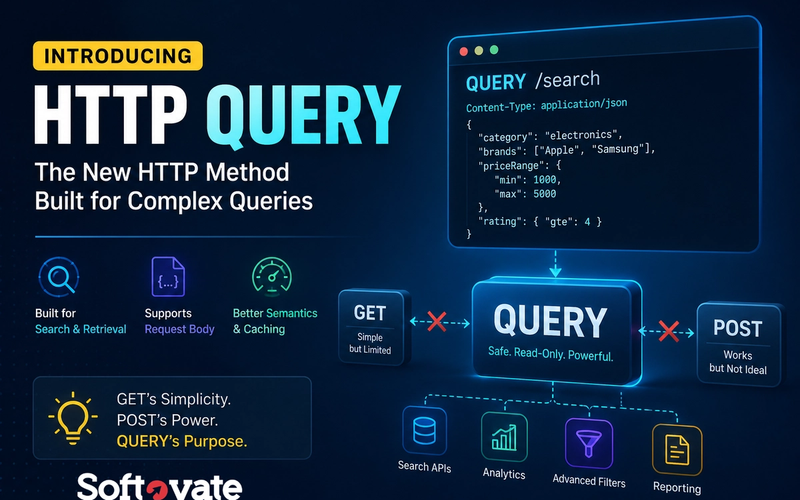
The Missing HTTP Method Is Finally Here: HTTP QUERY Explained
HTTP QUERY is a new HTTP method designed specifically for read-only data retrieval that requires a request body. Learn why GET requests struggle with complex searches, why POST became an imperfect workaround, and how HTTP QUERY provides a cleaner, standards-based solution for modern APIs.
- Web Development
- API Development
- Backend Development
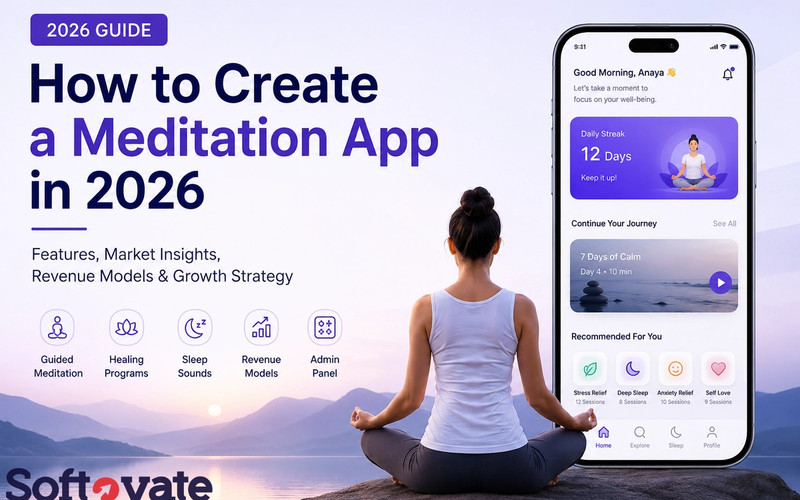
How to Create a Meditation App in 2026: Features, Costs, Revenue Models & Growth Strategy
Planning to build a meditation app in 2026? Learn about essential features, guided meditation, healing programs, admin panel requirements, revenue models, user acquisition strategies, development costs, and monetization opportunities.
- Mobile App Development
- Meditation App
- Wellness App
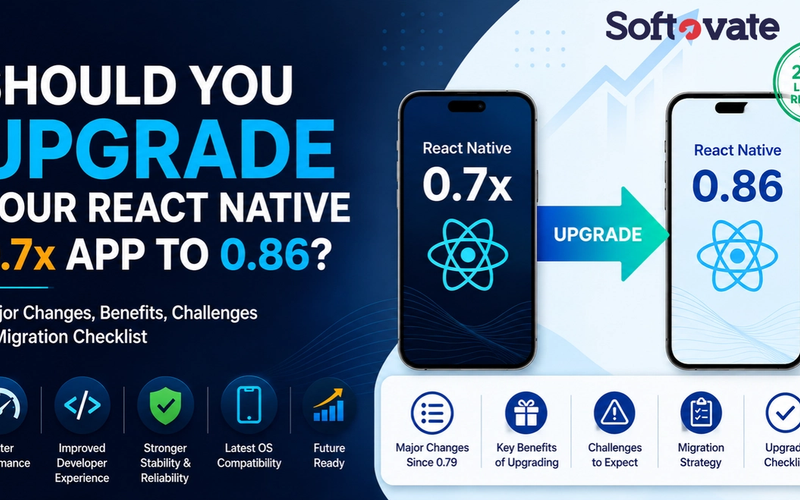
Should You Upgrade to React Native 0.86? Complete Guide for React Native 0.7x Apps
Still running React Native 0.7x? Learn what's changed from React Native 0.80 to 0.86, the benefits of upgrading, potential challenges, migration strategy, upgrade checklist, and the impact on your existing mobile application.
- React Native
- Mobile App Development
- Hire React Native Developer