

The transportation and logistics industry is undergoing rapid digital transformation. Many transport companies still rely on Excel sheets, manual registers, phone calls, WhatsApp, and paper-based records. While these methods may work initially, they create operational challenges as businesses grow. A well-designed Transport Management System (TMS) centralizes operations, improves visibility, reduces inefficiencies, and delivers real-time insights into business performance.
Common Problems with Manual Transport Management
- Missing trip records
- Vehicle utilization issues
- Delayed billing
- Driver management challenges
- Lack of visibility into profitability
- Difficulty tracking expenses
- Manual reporting errors
This is where a Transport Management System (TMS) or Logistics Management System becomes essential.
What Is a Transport Management System (TMS)?
A Transport Management System (TMS) is software designed to manage, optimize, and automate transportation and logistics operations. It serves as a centralized platform for:
- Vehicles and drivers
- Trips, loads, and routes
- Customers and suppliers
- Expenses and billing
- Reports and compliance
Why Logistics Companies Are Moving Away from Manual Management
Many transport businesses start with spreadsheets and paper records. As operations grow, manual processes become difficult to manage.
Lack of visibility
Owners struggle to answer: Which vehicle is available? Which trip is profitable? Which driver performs best?
Reporting delays
Generating reports manually often takes hours or even days—too slow for day-to-day decisions.
Data inconsistency
Multiple employees maintaining separate records leads to inaccurate, conflicting data.
Revenue leakage
Missing expenses and incorrect trip calculations directly impact profitability.
Manual processes also become increasingly difficult to scale as fleets expand.
Benefits of a Transport Management System
- Centralized operations — one platform for all transport workflows
- Real-time visibility — trips, vehicles, drivers, expenses, and revenue
- Better profitability tracking — trip-wise, vehicle-wise, and customer-wise P&L
- Faster billing — invoices and trip reports generated quickly
- Reduced human errors — automation minimizes manual mistakes
- Improved fleet utilization — vehicles used more efficiently
- Data-driven decisions — actionable insights for management
See how we built an all-in-one transport platform with load matching, LR management, GPS tracking, and AI-powered operations—explore the Fleet Transport Digital Platform case study.
Core Modules of a Modern Transport Management System
1. Trip Management
Trip management is the heart of every TMS. Core features include trip creation, route planning, vehicle and driver assignment, trip tracking, status updates, and trip closure.
Reports: trip-wise revenue, expenses, and profit & loss.
2. Lorry Receipt (LR) Management
Lorry Receipts remain critical in logistics operations. Features include LR generation, tracking, customer mapping, consignment details, delivery status, and search history.
Benefits: reduced paperwork, faster retrieval, improved operational control.
3. E-Way Bill Management
Managing e-way bills manually is time-consuming. A TMS should support e-way bill tracking, expiry monitoring, document storage, trip linking, and alerts.
Benefits: better compliance, reduced penalties, faster document management.
4. Vehicle Management
A comprehensive vehicle module should include vehicle master data, registration, type, load capacity, ownership, availability status (available, on trip, maintenance, inactive), GPS tracking, and expense tracking for fuel, toll, repairs, insurance, and maintenance.
Load management within this module covers capacity utilization, load distribution, and shared loads.
5. Driver Management
Driver profiles, license details, contact information, joining date, and performance records. Key reports include driver-wise trip reports, profit/loss by driver, and driver expense reports for advances and settlements.
6. Customer Management
Customer profiles, billing information, payment terms, and outstanding balances—with reports for customer revenue, profitability, and outstanding payments.
7. Supplier Management
Track fleet owners, vehicle suppliers, and transport partners. Features include supplier ledger, payment management, trip allocation, and outstanding balances.
8. Load Management
Load booking, assignment, vehicle allocation, capacity optimization, partial load management, and shared load management—for better vehicle utilization and increased profitability.
9. Staff Management
Many TMS platforms include HR functionality: attendance (check-in/out, shifts), leave management (requests, approvals, balances), salary management (calculation, incentives, deductions), and payouts (employee payouts, driver settlements, expense reimbursements).
Reporting & Analytics Module
A powerful reporting system transforms operational data into business intelligence.
| Report type | What it tracks |
|---|---|
| Trip-wise | Revenue, expenses, profitability per trip |
| Vehicle-wise | Utilization, expenses, revenue per vehicle |
| Customer-wise | Revenue, outstanding payments, profitability |
| Driver-wise | Trips, revenue, performance metrics |
| Profit & Loss | Daily, monthly, vehicle-wise, customer-wise, and trip-wise P&L |
Profit & Loss reporting is one of the most valuable capabilities in a TMS—giving leadership a clear view of what is actually making money.
Advanced Features for Modern TMS Platforms
GPS tracking
Real-time vehicle location and trip visibility integrated with your operations dashboard.
Driver mobile app
Trip updates, document upload, expense submission, and route details on Android and iOS.
Customer portal
Track consignments, download invoices, and view delivery status in real time.
Automated notifications
Updates via SMS, WhatsApp, email, and push notifications for trips, LR, and billing events.
Document management should store RC, insurance, permits, e-way bills, and invoices in one secure, searchable system.
Building driver or customer apps for your TMS? See our mobile app development capabilities for logistics products.
SaaS-Based TMS vs Traditional Software
Modern businesses increasingly prefer SaaS-based solutions over on-premise installs.
| SaaS TMS advantages | Why it matters |
|---|---|
| Cloud access | Operations teams work from anywhere—office, branch, or field |
| Lower infrastructure costs | No servers to maintain; predictable subscription economics |
| Automatic updates | Compliance, features, and security patches roll out centrally |
| Better scalability | Add branches, users, and vehicles without re-architecting |
| Remote accessibility | Ideal for multi-branch logistics and distributed fleets |
How Much Does It Cost to Build a Transport Management System?
One of the most common questions businesses ask is: "How much does it cost to build a TMS?"
The answer depends entirely on scope and feature set. Key factors include:
- Number of modules
- Mobile app requirements (driver, customer, admin)
- GPS integration
- Reporting complexity
- SaaS architecture
- Multi-branch and multi-company support
- Automation and integration requirements
A simple transport management solution differs significantly from an enterprise-grade logistics platform. The best approach is to define business requirements and prepare a detailed scope before estimating development costs. Our custom development consulting team can help you scope and prioritize the right MVP.
Why Choose Softovate for Transport Management System Development?
At Softovate Technologies, we specialize in building custom enterprise software and SaaS platforms tailored to business workflows—including production logistics platforms like our Fleet Transport Digital Platform.
Enterprise software
Custom TMS solutions designed around your operations—not generic templates forced onto your business.
SaaS platforms
Scalable cloud-based systems built for multi-tenant, multi-branch logistics businesses.
Mobile apps
Driver apps, customer portals, and management apps for Android and iOS.
Integrations
GPS providers, payment systems, ERP platforms, accounting software, and notification services.
Our focus is not just building software—it is building solutions that improve operational efficiency and support long-term growth. Whether you are managing 10 vehicles or 10,000, we can help design a Transport Management System that fits your business processes.
Frequently Asked Questions (FAQs)
-
What is a Transport Management System (TMS)?
A TMS is software that helps businesses manage transportation operations, including vehicles, drivers, trips, expenses, loads, and reporting.
-
Can a TMS support multiple branches?
Yes. Modern TMS platforms can support multiple branches, locations, and business units from a single system.
-
Can GPS tracking be integrated into a TMS?
Yes. Most modern systems support real-time GPS tracking integration with fleet dashboards and trip views.
-
Can drivers use a mobile application?
Absolutely. Driver apps can be developed for Android and iOS to manage trips, expenses, documents, and communication.
-
Can customers track their shipments?
Yes. Customer portals and shipment tracking modules provide real-time visibility into consignment status.
-
Can a TMS generate Profit & Loss reports?
Yes. Advanced reporting modules can generate trip-wise, customer-wise, vehicle-wise, and company-level P&L reports.
-
Is a SaaS-based TMS better than traditional software?
For most businesses, SaaS platforms provide better scalability, accessibility, and lower infrastructure management requirements.
-
How long does it take to build a Transport Management System?
The timeline depends on features, integrations, and project complexity. A detailed requirement analysis is typically required before estimating development timelines.
Final Thoughts
As logistics operations become more complex, manual management methods become increasingly difficult to scale. A Transport Management System helps businesses improve visibility, streamline operations, reduce errors, optimize fleet utilization, and make better decisions through real-time data.
Whether you are running a logistics startup, transport company, fleet operation, or enterprise supply chain network, investing in a well-designed TMS can significantly improve operational efficiency and profitability.
Latest Blogs
View All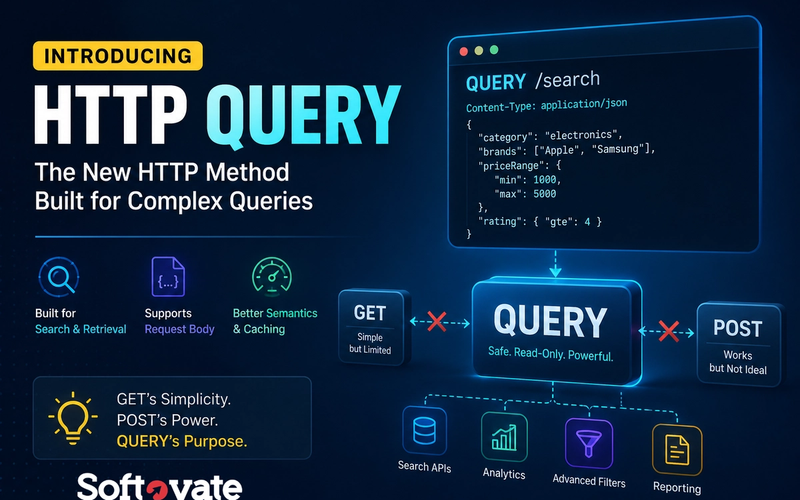
The Missing HTTP Method Is Finally Here: HTTP QUERY Explained
HTTP QUERY is a new HTTP method designed specifically for read-only data retrieval that requires a request body. Learn why GET requests struggle with complex searches, why POST became an imperfect workaround, and how HTTP QUERY provides a cleaner, standards-based solution for modern APIs.
- Web Development
- API Development
- Backend Development

How to Create a Meditation App in 2026: Features, Costs, Revenue Models & Growth Strategy
Planning to build a meditation app in 2026? Learn about essential features, guided meditation, healing programs, admin panel requirements, revenue models, user acquisition strategies, development costs, and monetization opportunities.
- Mobile App Development
- Meditation App
- Wellness App
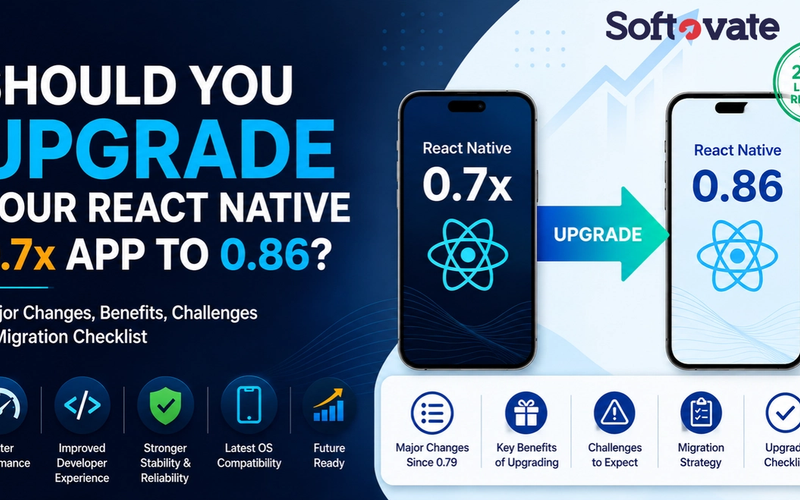
Should You Upgrade to React Native 0.86? Complete Guide for React Native 0.7x Apps
Still running React Native 0.7x? Learn what's changed from React Native 0.80 to 0.86, the benefits of upgrading, potential challenges, migration strategy, upgrade checklist, and the impact on your existing mobile application.
- React Native
- Mobile App Development
- Hire React Native Developer