

If you are planning to build a mobile app in 2026, one of the first technical decisions you will face is: React Native or Flutter? Both let you ship Android and iOS from a single codebase. Both are mature, backed by major tech companies, and power millions of users. There is no universal winner—the right choice depends on your product, team, and long-term roadmap.
This guide compares React Native and Flutter based on the factors that actually matter to startups and businesses in 2026: performance, UI flexibility, development speed, hiring, ecosystem, multi-platform support, and scalability.
Already planning your mobile build? Explore mobile app development, React Native development, and Flutter development with Softovate.
React Native vs Flutter: Quick Overview
React Native
Open-source framework maintained by Meta. Uses JavaScript, TypeScript, and the React ecosystem.
Builds apps with native platform components—a look and feel that closely matches Android and iOS standards.
Used by: Meta, Shopify, Microsoft, Discord
Flutter
Google's cross-platform UI framework. Uses Dart, Google's rendering engine, and a widget-based architecture.
Renders its own UI rather than relying on platform components—highly consistent experiences across devices.
Used by: Google, BMW, Alibaba
Market Adoption in 2026
Both frameworks continue to dominate cross-platform development. Industry analyses suggest Flutter holds roughly 46% of the cross-platform market, while React Native maintains around 35–38%—making them the two most widely adopted solutions globally.
The important takeaway: Neither framework is disappearing anytime soon. Choosing either is generally a safe long-term decision.
Performance Comparison
A few years ago, Flutter had a clearer performance edge. In 2026, the gap has narrowed significantly. React Native's modern architecture—Fabric, TurboModules, Hermes, and JSI—has improved rendering and startup performance. Flutter continues to deliver excellent performance through its Impeller engine.
Flutter advantages
Excellent animation performance, full rendering control, highly customized UI, consistent behavior across devices.
React Native advantages
Native platform components, better platform-specific feel, faster adaptation to new iOS and Android UI changes.
For most business applications, users will not notice a meaningful performance difference. Performance should rarely be the deciding factor.
UI & Design Flexibility
Flutter draws every interface element itself—designers get complete control. Flutter is often preferred for custom animations, unique branding, design-heavy products, and creative applications.
React Native uses native platform components—advantages include a native Android experience, native iOS experience, and better adherence to platform conventions.
- Choose Flutter when you want the exact same UI everywhere.
- Choose React Native when you want users to feel at home on their platform.
Development Speed
Both frameworks significantly reduce effort compared to separate native apps. Speed often depends more on team expertise than the framework itself. A company with experienced React developers usually moves faster with React Native; a Flutter-experienced team often moves faster with Flutter.
Technology rarely matters as much as team familiarity.
Hiring & Talent Availability
This is one of the most overlooked business considerations.
React Native
- Larger developer pool (JavaScript ecosystem)
- Easier hiring and faster onboarding
- Extensive community support
Flutter
- Growing developer community
- Strong Google backing
- Increasing enterprise adoption
Finding experienced Flutter developers can still be more challenging in some markets. For startups planning rapid scaling, React Native often has an advantage due to talent availability—though the right choice still depends on your hiring strategy and existing team.
Ecosystem & Third-Party Libraries
React Native benefits from the enormous JavaScript ecosystem: authentication, payments, analytics, maps, push notifications, and enterprise integrations.
Flutter's ecosystem has grown tremendously with tens of thousands of packages, but React Native still leads in overall maturity and package availability for many enterprise integrations.
Web & Multi-Platform Support
If your roadmap includes mobile, web, and desktop, Flutter was designed as a broader multi-platform framework—Android, iOS, web, Windows, macOS, and Linux from a shared stack.
React Native also supports web and desktop through additional frameworks and tools, especially when you already have React expertise on the team.
Maintenance & Long-Term Scalability
Both frameworks power large enterprises, are actively maintained, and receive frequent updates. The question is not which can scale—it is which fits your product strategy.
Architecture decisions, code quality, and engineering practices usually have a much bigger impact than framework selection alone.
When React Native Is the Better Choice
- Your team already knows React
- You want faster hiring
- You need strong ecosystem support
- You want a native platform feel
- You plan to share logic with existing React web apps
- You want easier long-term team scaling
When Flutter Is the Better Choice
- You need highly customized UI
- Design consistency is critical
- Your product relies heavily on animations
- You want broader multi-platform support
- Brand experience is a top priority
- You prefer Flutter's widget-driven architecture
The Most Important Truth Most Articles Ignore
Many comparison articles try to declare a winner. That is the wrong approach. The better question is: Which framework fits your product?
A fintech app, social platform, food delivery product, or AI-powered SaaS app may have very different requirements. The framework should support the product—the product should never be forced to fit the framework.
Final Thoughts
React Native and Flutter are both excellent choices in 2026. Neither is universally better. React Native offers a massive ecosystem, easier hiring, and strong native integration. Flutter offers outstanding UI flexibility, design consistency, and multi-platform capabilities.
The best choice depends on your business goals, product requirements, team expertise, and long-term vision. Focus less on framework wars and more on building the right product with the right technology—and the right engineering partner.
Ready to build? Work with our React Native developers, Flutter developers, or full mobile app development team.
Latest Blogs
View All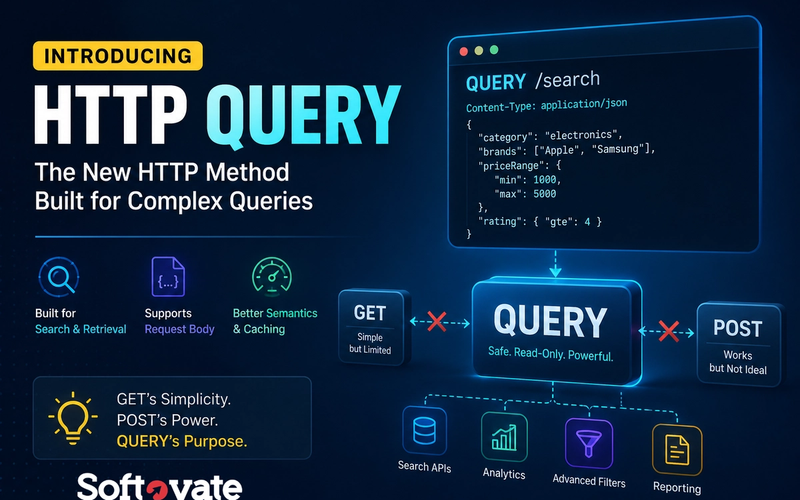
The Missing HTTP Method Is Finally Here: HTTP QUERY Explained
HTTP QUERY is a new HTTP method designed specifically for read-only data retrieval that requires a request body. Learn why GET requests struggle with complex searches, why POST became an imperfect workaround, and how HTTP QUERY provides a cleaner, standards-based solution for modern APIs.
- Web Development
- API Development
- Backend Development

How to Create a Meditation App in 2026: Features, Costs, Revenue Models & Growth Strategy
Planning to build a meditation app in 2026? Learn about essential features, guided meditation, healing programs, admin panel requirements, revenue models, user acquisition strategies, development costs, and monetization opportunities.
- Mobile App Development
- Meditation App
- Wellness App
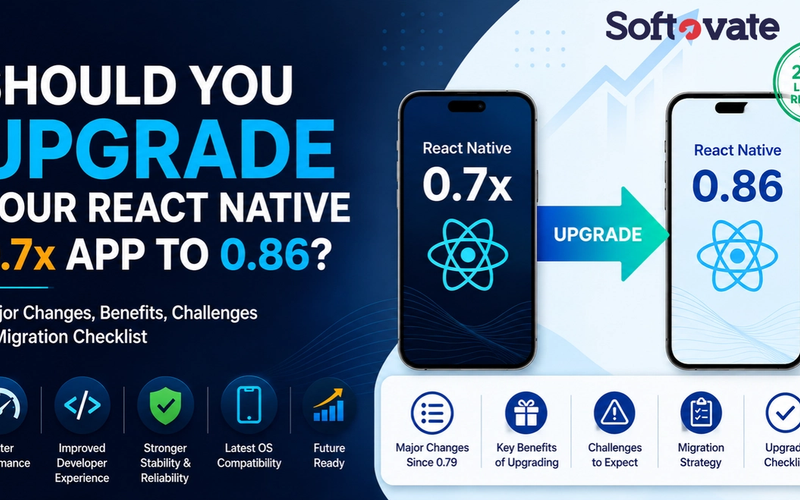
Should You Upgrade to React Native 0.86? Complete Guide for React Native 0.7x Apps
Still running React Native 0.7x? Learn what's changed from React Native 0.80 to 0.86, the benefits of upgrading, potential challenges, migration strategy, upgrade checklist, and the impact on your existing mobile application.
- React Native
- Mobile App Development
- Hire React Native Developer