

A common question we hear from founders and business owners: one software company quotes $5,000, another quotes $50,000—for the same requirement. How can the difference be so huge?
"I gave the same requirement to multiple software companies. One quoted $5,000 and another quoted $50,000. How can the difference be so huge?"
The answer is simple: you're not comparing software. You're comparing approaches, expertise, quality, and long-term business outcomes.
Software development is not a commodity. Two agencies can build the same feature list but deliver completely different products. In this guide, we break down why quotes vary by 10x—and how to evaluate what you're actually paying for.
What Is the Ideal Cost of Software Development?
There is no universal "ideal cost." The right investment depends on:
- Product complexity
- Technology stack
- Team expertise
- Quality expectations
- Scalability requirements
- Security requirements
- User experience goals
- Long-term business vision
The real question isn't "Which quote is cheaper?" The real question is "Which investment will create the best outcome for my business?"
Why Do Software Quotes Differ So Much?
When clients approach agencies, they usually come with an idea, a rough requirement, and a vision of the product. Every agency interprets that vision differently.
Some focus on delivering exactly what is written. Others focus on building what will actually succeed in the market. That difference creates a huge gap in pricing.
Not sure which approach fits your product? Start with a conversation—book a free consultation to discuss scope, budget, and realistic outcomes.
The Three Levels of Software Development
| Level | Primary goal | Typical outcome |
|---|---|---|
| Level 1 · Lowest cost | Complete as cheaply and quickly as possible | Works technically; hard to scale and maintain |
| Level 2 · Standard delivery | Deliver exactly what the client requested | Stable, meets requirements; limited strategic input |
| Level 3 · Product success | Build what is best for the product and market | Competitive, scalable, stronger business outcomes |
Level 1 · The lowest-cost approach
Goal: Complete the project as cheaply and quickly as possible.
Typical characteristics: Minimal planning, limited research, junior developers, little or no testing, no product strategy, basic UI/UX, shortcuts in architecture.
Result: The software works—technically. But poor code quality, difficult scaling, frequent bugs, security concerns, slow performance, hard maintenance, and expensive future upgrades often follow.
At first it appears cost-effective. In reality, many businesses end up rebuilding the entire product later.
Level 2 · Standard delivery
Goal: Deliver exactly what the client requested.
Typical characteristics: Good development process, decent quality standards, requirement-based execution, reasonable testing, acceptable UI/UX.
Result: Product works as expected, meets project requirements, stable for normal business use. This is where many professional agencies operate—the project gets delivered successfully, but the focus is on completing the requirement rather than maximizing product success.
Level 3 · Product success approach
Goal: Deliver not only what was asked for—but what is best for the product.
Typical characteristics: Market research, competitor analysis, product strategy recommendations, industry best practices, scalability planning, security-first architecture, advanced testing, modern UI/UX, performance optimization, long-term product thinking.
Result: A product that competes effectively, scales as the business grows, delivers better UX, reduces future development costs, and creates stronger business outcomes. This approach costs more—but often delivers significantly higher business value.
What Clients Usually Don't Ask For
Most clients are experts in their business. Technology partners are experts in building digital products. Because of this, many critical decisions are never included in the original requirement.
Choosing the right technology stack
The wrong technology choice can create performance issues, scalability limitations, higher maintenance costs, and future migration expenses. Our custom development consulting helps founders make stack decisions before code is written.
Competitor research
Questions a strong partner asks:
- What are industry leaders doing?
- Which features are users expecting today?
- What opportunities exist to differentiate?
Many agencies skip this step entirely.
Modern UI/UX planning
Users compare every product with Apple-level experiences, Google-level simplicity, and industry-leading applications. A product can be technically functional but still fail because users find it confusing.
Performance & scalability
What happens with 100 users? 10,000? 1 million? Planning for growth matters from day one—especially for MVPs that need to evolve into full platforms.
Security & reliability
Security is rarely mentioned in requirements. Yet it is one of the most important aspects of modern software.
Testing beyond happy paths
Many products are tested only for expected scenarios. Great products are tested for edge cases, user mistakes, network failures, device variations, and performance bottlenecks.
Why Cheap Software Often Becomes Expensive
Many businesses believe they are saving money by choosing the lowest quote. Unfortunately, they often pay later through:
- Bug fixes and rewrites
- Performance issues
- Customer complaints
- Lost users
- Security incidents
- Expensive maintenance
The hidden cost of poor software is much higher than the initial savings. If you spend $10,000 building a product that struggles to compete in the market, that investment has not truly delivered value.
How to Evaluate a Software Agency
Don't evaluate agencies only by price. Ask:
- Do they challenge your assumptions?
- Do they suggest improvements?
- Do they discuss scalability?
- Do they discuss security?
- Do they discuss user experience?
- Do they discuss business outcomes?
A good technology partner asks questions and brings ideas—not just resources. A vendor simply takes orders. The goal is not software delivery alone; the goal is business success.
See how we approach product decisions in our case studies and about Softovate.
Our Philosophy
Most clients come to us with an idea. We bring technology expertise, product experience, industry knowledge, and strategic thinking.
We understand that behind every project is a dream, a business goal, significant investment, and months or years of effort. That's why we don't focus only on completing tasks—we focus on helping products succeed.
How We Work
15+ years of experience
We've seen products succeed. We've seen products fail. That experience helps us identify opportunities and risks early. Learn more about our team and track record on About Softovate.
We think beyond requirements
We don't simply ask: "What did the client request?" We ask: "What will create the best result?"
We act as a technology partner
Our role is not just to write code. Our role is to help make better product decisions—through consulting, dedicated engineering teams, and long-term collaboration.
We follow industry standards
- Clean architecture
- Scalable systems
- Performance optimization
- Security best practices
- Automated testing
- Maintainable code
- Modern UI/UX
Bridging the Gap Between Cheap and Overpriced
Some agencies focus only on low cost. Others focus on premium consulting budgets that many businesses cannot justify. We position ourselves in the middle.
Our goal is simple:
- World-class quality
- Industry-standard processes
- Scalable architecture
- Strong user experience
- Practical budgets
- Long-term partnership
Not the cheapest. Not unnecessarily expensive. Simply the right balance between quality, expertise, and value—whether you're launching an MVP, scaling a SaaS product, or building enterprise software with dedicated remote engineers.
Final Thoughts
When comparing software development quotes, don't ask: "Why is one company more expensive?"
Ask: "What am I actually getting for the investment?"
Because software is not just about delivering features. It's about building a product that users love, businesses can grow on, and founders can be proud of.
Choose a technology partner that cares about your product's success—not just the project sign-off.
Latest Blogs
View All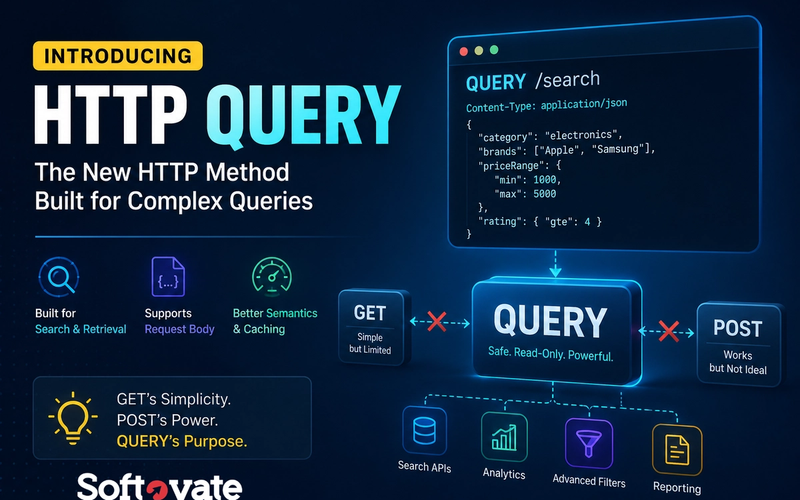
The Missing HTTP Method Is Finally Here: HTTP QUERY Explained
HTTP QUERY is a new HTTP method designed specifically for read-only data retrieval that requires a request body. Learn why GET requests struggle with complex searches, why POST became an imperfect workaround, and how HTTP QUERY provides a cleaner, standards-based solution for modern APIs.
- Web Development
- API Development
- Backend Development
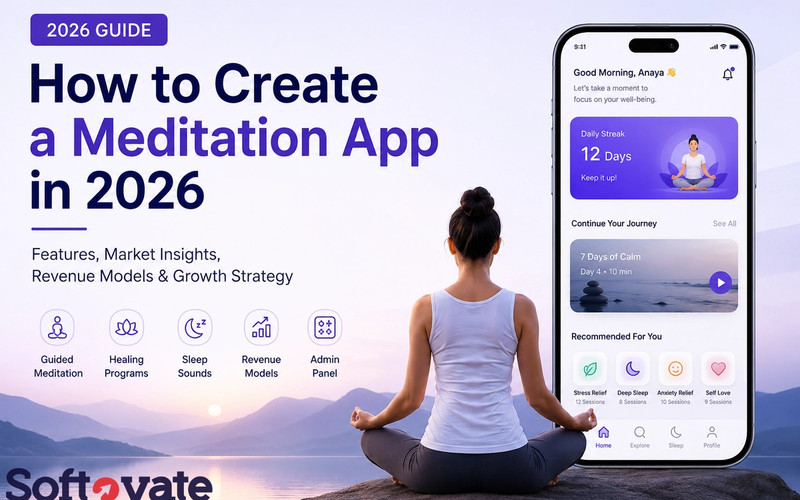
How to Create a Meditation App in 2026: Features, Costs, Revenue Models & Growth Strategy
Planning to build a meditation app in 2026? Learn about essential features, guided meditation, healing programs, admin panel requirements, revenue models, user acquisition strategies, development costs, and monetization opportunities.
- Mobile App Development
- Meditation App
- Wellness App
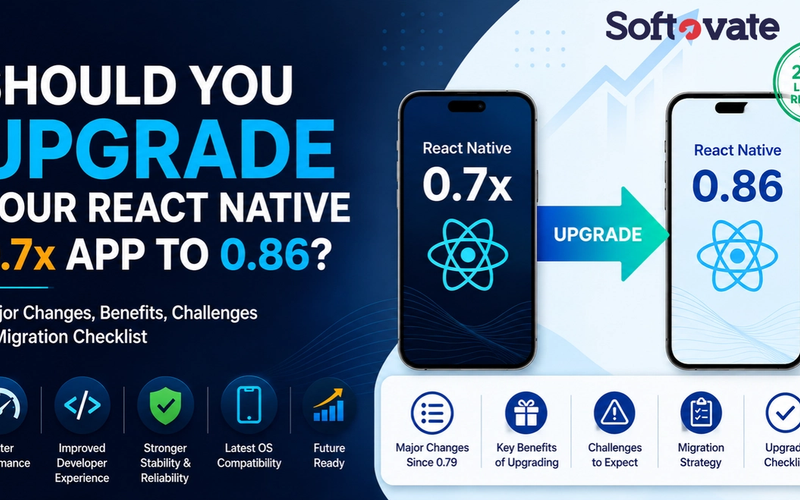
Should You Upgrade to React Native 0.86? Complete Guide for React Native 0.7x Apps
Still running React Native 0.7x? Learn what's changed from React Native 0.80 to 0.86, the benefits of upgrading, potential challenges, migration strategy, upgrade checklist, and the impact on your existing mobile application.
- React Native
- Mobile App Development
- Hire React Native Developer