

Most founders celebrate when their mobile app is finally live on the App Store or Google Play. The app works, users can sign up, and features look great. But here is an uncomfortable reality: a working app is not necessarily a production-ready app.
These practices are considered fundamental in professional software development—yet in our experience, less than 20% of apps actually meet basic production-readiness standards. The reason is not that these features are difficult to build. Clients often focus on product ideas and customer journeys, while technology partners are expected to think beyond visible features and prepare the product for real-world operations, growth, compliance, security, and scalability.
Many development teams deliver what was requested. Great technology partners deliver what will eventually be needed. Before you invest in marketing, user acquisition, or scaling, ask yourself: Is my app truly production ready?
Production Readiness at a Glance
| Area | Why it matters |
|---|---|
| Force update mechanism | Ship critical fixes to all users quickly |
| User & device abuse management | Stop spam, fraud, and policy violations |
| Analytics & crash monitoring | Measure behavior and fix failures fast |
| Marketing attribution | Know which campaigns drive real users |
| Account deletion & compliance | Meet Apple, Google, and privacy rules |
| Content moderation | Protect community quality at scale |
| Segmented notifications | Improve engagement with targeted messaging |
| Policy acceptance tracking | Legal compliance and dispute resolution |
| Data security & encryption | Protect users and brand trust |
| Backup & disaster recovery | Recover from failures without data loss |
| Role-based access control | Secure admin operations at scale |
| Feature flags & remote config | Release safely without app store delays |
| Logging & audit trails | Accountability when things go wrong |
| Support & customer service tools | Retain users when they need help |
Building or auditing a mobile product? Explore our mobile app development services for production-grade engineering from day one.
1. Force Update Mechanism
Imagine discovering a critical bug, security issue, or compliance change. You release a new version immediately—but thousands of users continue using the old version. Without a force-update system, critical fixes can take weeks to reach your entire user base.
- Mandatory and optional update flows
- Minimum supported version control
- Version management through admin panel
- Instant deprecation of outdated builds
2. User, Device & Abuse Management
What happens when a user spams content, creates fake accounts, harasses others, or abuses referral systems? Can your team respond immediately?
- User and device blocking
- Account suspension and permanent bans
- IP restrictions and fraud detection rules
- Audit logs for moderation actions
Many platforms only deactivate accounts. Experienced platforms stop abuse at the device and infrastructure level.
3. Analytics, Crash Reporting & Performance Monitoring
You cannot improve what you cannot measure. Every product owner should be able to answer:
- Which screens are most visited?
- Where do users drop off?
- Which features are never used?
- Which devices experience crashes?
- How fast does each screen load?
- User analytics and screen tracking
- Funnel analysis
- Crash monitoring
- Performance monitoring
- API failure tracking
Without analytics, product decisions become assumptions.
4. Marketing Attribution & Ad Tracking Readiness
Many businesses spend heavily on Google Ads, Meta Ads, influencer campaigns, and affiliate marketing—but cannot accurately answer: Which campaign generated actual users?
- Install and uninstall tracking
- Conversion events and deep linking
- Meta SDK integration
- Google Ads conversion tracking
- Campaign attribution
If these foundations are missing, marketing budgets become difficult to optimize.
5. Account Deletion & Compliance Requirements
Apple and Google have become increasingly strict about user privacy. If users can create accounts, they are often expected to delete their account, request data removal, understand what data is retained, and review privacy policies.
- Clear data deletion workflows
- Defined retention duration and legal obligations
- User consent records
- Transparent privacy policy implementation
Many apps are delayed or rejected because they fail to comply with these requirements. Compliance is no longer optional.
6. Content Moderation & Reporting System
If your application contains posts, images, videos, comments, reviews, chats, or any user-generated content, moderation becomes essential.
- Report content, users, and chats
- Automated moderation rules
- Warning notifications
- Temporary suspension and permanent bans
The larger your community grows, the more important moderation becomes.
7. Broadcast Notifications & User Segmentation
Push notifications are powerful—but production-grade platforms go far beyond sending messages to everyone.
Administrators should be able to target users based on gender, location, language, interests, subscription plans, user activity, and purchase history.
- Notify only premium users
- Notify users from a specific city
- Notify inactive users
- Notify users who abandoned onboarding
Smart segmentation dramatically improves engagement rates.
8. Privacy Policy & Terms Acceptance Management
What happens when your legal team updates privacy policy, terms & conditions, refund policy, or subscription terms? Updating a website page alone is not enough.
- Track policy versions
- Record acceptance timestamps
- Store accepted version history
- Force re-acceptance when policies change
- Restrict app usage until acceptance
This becomes extremely important for legal compliance and dispute resolution.
9. Data Security & Encryption
Security should never be an afterthought. Ask yourself:
- Is sensitive data encrypted?
- Are API requests secured?
- Are passwords hashed properly?
- Are authentication tokens protected?
- Is local storage secured?
- Are backups encrypted?
Depending on your industry—FinTech, healthcare, social media, e-commerce, or education—one security incident can damage years of brand trust.
10. Backup, Recovery & Disaster Management
Imagine your database crashes today. Can you recover? How long will it take? Will users lose data?
- Automated backups and database snapshots
- Recovery procedures and rollback plans
- Infrastructure monitoring
- Disaster recovery strategy
Most teams only think about backups after a failure occurs. By then, it is too late.
11. Role-Based Access Control (RBAC)
Many admin panels have only one admin account—that creates operational and security risks. Production systems should support:
- Super Admin and Admin roles
- Moderator and Support Executive
- Content Manager and Marketing Manager
- Feature-level permissions per role
Each role should have access only to the features they require.
12. Feature Flags & Remote Configuration
What if you want to enable a feature for only 10% of users, disable a feature instantly, or test new functionality without releasing a new app version?
- Gradual rollouts and A/B testing
- Instant kill switches for risky features
- Remote configuration without app store review
- Faster experimentation with lower release risk
Companies like Netflix, Uber, and Airbnb rely heavily on these systems.
13. Logging & Audit Trails
When something goes wrong, can you answer who changed a setting, when it was changed, and which administrator performed the action?
Audit logs provide accountability and simplify troubleshooting. They are especially important for enterprise products and regulated industries.
14. Support & Customer Service Tools
Users will eventually need help. A production-ready application should support:
- Ticketing and in-app support
- Contact forms and FAQ management
- Chat support
- Feedback collection
Support systems directly impact user retention and satisfaction.
Final Thoughts
Building features is only one part of software development. Making those features reliable, scalable, secure, compliant, measurable, and manageable is what makes an application production ready.
Unfortunately, many apps are launched with beautiful UI and functional features but lack the operational foundations required to support real users. Before spending money on marketing and growth, take a step back and ask:
"If my app gets 100,000 users tomorrow, am I ready?"
If the answer is uncertain, it may be time for a production readiness audit. At Softovate, we frequently review existing mobile and web applications and identify critical gaps in security, scalability, analytics, compliance, and operational readiness before businesses begin scaling.
Because launching an app is easy. Operating and growing it successfully is where real engineering begins.
Need a team that builds for scale—not just launch day? Work with Softovate through our Hire Mobile App Developer program for production-ready mobile engineering.
Latest Blogs
View All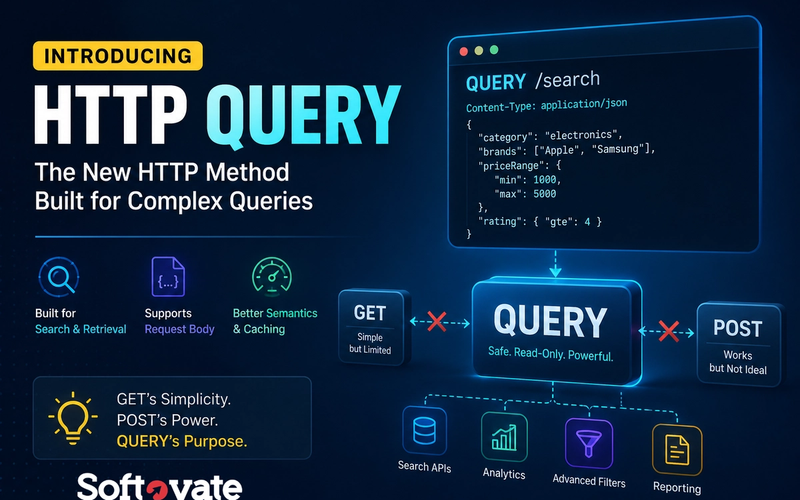
The Missing HTTP Method Is Finally Here: HTTP QUERY Explained
HTTP QUERY is a new HTTP method designed specifically for read-only data retrieval that requires a request body. Learn why GET requests struggle with complex searches, why POST became an imperfect workaround, and how HTTP QUERY provides a cleaner, standards-based solution for modern APIs.
- Web Development
- API Development
- Backend Development
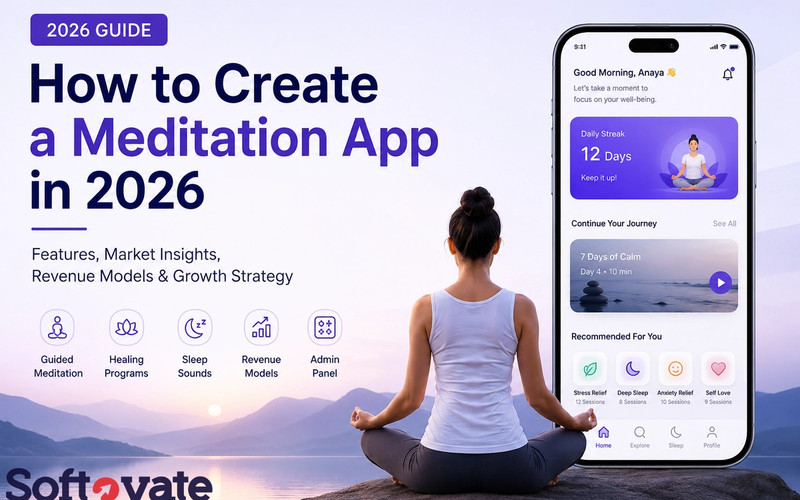
How to Create a Meditation App in 2026: Features, Costs, Revenue Models & Growth Strategy
Planning to build a meditation app in 2026? Learn about essential features, guided meditation, healing programs, admin panel requirements, revenue models, user acquisition strategies, development costs, and monetization opportunities.
- Mobile App Development
- Meditation App
- Wellness App
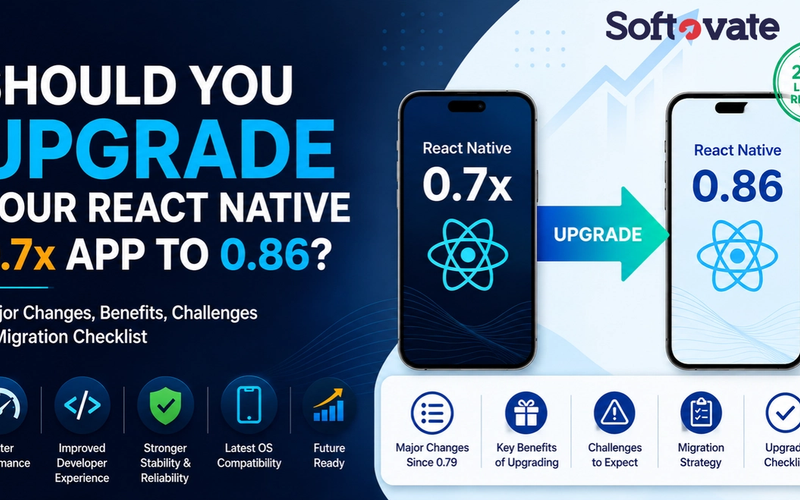
Should You Upgrade to React Native 0.86? Complete Guide for React Native 0.7x Apps
Still running React Native 0.7x? Learn what's changed from React Native 0.80 to 0.86, the benefits of upgrading, potential challenges, migration strategy, upgrade checklist, and the impact on your existing mobile application.
- React Native
- Mobile App Development
- Hire React Native Developer