

Every business relies on dozens of repetitive tasks to keep operations running smoothly. Employees update spreadsheets, respond to emails, schedule meetings, generate reports, and manage customer inquiries every day—essential work that often consumes 50% to 80% of the working day.
While these tasks are essential, they create bottlenecks that limit growth. Artificial Intelligence is changing this reality. Modern AI Agents can automate a large percentage of repetitive business activities, allowing organizations to reduce operational costs, improve productivity, and focus human talent on higher-value work.
In many organizations, AI Agents can automate up to 80% of routine administrative and operational tasks. In this guide, we explain what AI Agents are, where they deliver the most value, and how to get started.
What Are AI Agents?
An AI Agent is an intelligent software system capable of understanding goals, making decisions, interacting with software applications, accessing business data, and completing tasks with minimal human intervention.
Unlike traditional automation tools that follow fixed rules, AI Agents can:
- Understand natural language
- Analyze information
- Make context-aware decisions
- Interact with multiple systems
- Execute multi-step workflows
- Learn from feedback
Think of an AI Agent as a digital employee that can perform work rather than simply provide information.
Businesses looking to build intelligent automation systems can explore our AI Agent Development Services.
Why Businesses Struggle With Repetitive Work
Most organizations underestimate how much time employees spend on repetitive activities.
Common examples include:
- Data entry
- CRM updates
- Customer follow-ups
- Appointment scheduling
- Report generation
- Document processing
- Email management
- Internal approvals
- Invoice processing
- Information retrieval
These tasks often consume 50% to 80% of an employee's working day. As businesses grow, the volume of repetitive work increases, creating inefficiencies and higher operating costs. This is where AI Agents deliver substantial value.
How AI Agents Automate Business Operations
AI Agents can connect with existing business tools such as:
- CRM systems
- ERP platforms
- Email platforms
- Accounting software
- Helpdesk systems
- Project management tools
- Databases
- Internal applications
Once connected, they execute tasks automatically based on business rules and objectives. Instead of requiring human intervention at every step, AI Agents coordinate entire workflows from start to finish.
7 Ways AI Agents Automate Repetitive Tasks
| Area | What AI Agents automate | Key benefit |
|---|---|---|
| Customer support | Inquiries, tickets, escalations, order updates | 24/7 availability, faster responses |
| Sales processes | Lead qualification, CRM updates, follow-ups | Higher productivity, faster cycles |
| HR & recruitment | Resume screening, scheduling, onboarding | Faster hiring, reduced admin load |
| Finance & accounting | Invoices, payments, reports, reconciliation | Accuracy, improved visibility |
| Workflow & process | Approvals, routing, notifications, tracking | Fewer bottlenecks, faster execution |
| Knowledge management | Internal Q&A, document retrieval, summaries | Faster access, better productivity |
| Reporting & analytics | Data aggregation, dashboards, recommendations | Real-time insights, better decisions |
1. Customer Support Automation
Customer support teams spend significant time answering repetitive questions.
AI Agents can:
- Respond to customer inquiries
- Resolve common issues
- Create support tickets
- Escalate complex cases
- Provide order updates
- Schedule appointments
Business Benefits
- 24/7 support availability
- Faster response times
- Reduced support costs
- Improved customer satisfaction
For customer-facing conversation automation, explore our AI Chatbot Development Services—often the first layer before full agent workflows.
2. Sales Process Automation
Sales representatives often spend more time on administration than selling.
AI Agents can:
- Qualify leads
- Update CRM records
- Schedule meetings
- Send follow-up emails
- Generate proposals
- Track customer interactions
Business Benefits
- Higher sales productivity
- Improved lead management
- Faster sales cycles
- Better conversion rates
3. HR and Recruitment Automation
Recruitment and HR involve numerous repetitive processes.
AI Agents can:
- Screen resumes
- Rank candidates
- Schedule interviews
- Answer employee questions
- Manage onboarding workflows
- Generate HR reports
Business Benefits
- Faster hiring
- Reduced administrative workload
- Improved candidate experience
- Better workforce management
4. Finance and Accounting Automation
Financial operations contain many repetitive and time-consuming tasks.
AI Agents can:
- Process invoices
- Track payments
- Generate financial reports
- Monitor expenses
- Reconcile transactions
- Forecast cash flow
Business Benefits
- Increased accuracy
- Faster processing
- Reduced manual effort
- Improved financial visibility
5. Workflow and Process Automation
Every department has internal workflows that require coordination and approvals.
AI Agents can:
- Route requests automatically
- Track approvals
- Generate notifications
- Monitor task completion
- Escalate delays
- Update business systems
Business Benefits
- Faster execution
- Improved transparency
- Reduced bottlenecks
- Better operational efficiency
6. Knowledge Management Automation
Employees frequently search for information across documents, emails, and systems.
AI Agents can:
- Answer internal questions
- Search knowledge bases
- Retrieve documents
- Generate summaries
- Assist with onboarding
Business Benefits
- Faster information access
- Reduced training costs
- Improved productivity
- Better employee experience
7. Reporting and Analytics Automation
Managers spend hours collecting and analyzing business data.
AI Agents can:
- Aggregate information
- Generate reports
- Create dashboards
- Identify trends
- Deliver recommendations
Business Benefits
- Real-time insights
- Better decision making
- Faster reporting
- Improved business visibility
Real-World Example
From website inquiry to sales handoff
Imagine a company receives a new website inquiry. Instead of multiple employees handling the process, an AI Agent can:
- Capture the lead
- Analyze inquiry details
- Update the CRM
- Assign a lead score
- Schedule a consultation
- Send follow-up emails
- Notify the sales team
- Generate activity reports
All of this happens automatically without manual intervention.
AI Agents vs Traditional Automation
Traditional automation follows predefined rules. AI Agents combine intelligence with execution.
| Capability | Traditional automation | AI Agent |
|---|---|---|
| Decision making | Fixed rules only | Context-aware decisions |
| Natural language | Limited or none | Understands and responds |
| System integration | Often single-tool | Multi-system coordination |
| Workflow complexity | Simple, linear steps | Multi-step, adaptive workflows |
| Learning & adaptation | Static configuration | Learns from feedback |
| Technologies used | Scripts and triggers | AI, ML, NLP, and business logic |
They can make decisions rather than simply execute commands—handling more complex situations and adapting to changing conditions.
Can AI Agents Really Automate 80% of Repetitive Tasks?
For many organizations, the answer is yes. While every business is different, AI Agents are particularly effective at automating:
- Administrative work
- Data processing
- Customer interactions
- Workflow coordination
- Reporting activities
- Information management
Human employees remain essential for strategic thinking, relationship building, and complex decision-making. However, AI Agents can significantly reduce the burden of repetitive operational work.
How to Start Implementing AI Agents
Businesses should begin by identifying repetitive processes that consume the most time.
A practical implementation roadmap includes:
- Identify repetitive workflows
- Document existing processes
- Evaluate automation opportunities
- Build AI Agent integrations
- Test and optimize performance
- Scale automation across departments
Starting with high-volume repetitive tasks often delivers the fastest return on investment.
The Future of Business Automation
AI Agents are rapidly becoming the next evolution of business software.
Instead of employees manually operating systems, businesses will increasingly rely on AI Agents that coordinate activities across multiple platforms and execute workflows autonomously.
Organizations that adopt AI Agents today will gain significant advantages in productivity, efficiency, and scalability.
Build Custom AI Agents with Softovate
At Softovate, we develop intelligent AI Agent solutions that automate complex business processes and eliminate repetitive manual work.
Our expertise includes:
- AI Agent Development
- Workflow Automation
- Business Process Automation
- AI Integrations
- Enterprise AI Solutions
- Custom AI Applications
Whether you're looking to automate customer support, sales operations, HR workflows, finance processes, or internal business operations, our team can help you build AI Agents tailored to your specific requirements.
Explore our AI & Machine Learning Services to learn how AI Agents can transform your operations in 2026.
Latest Blogs
View All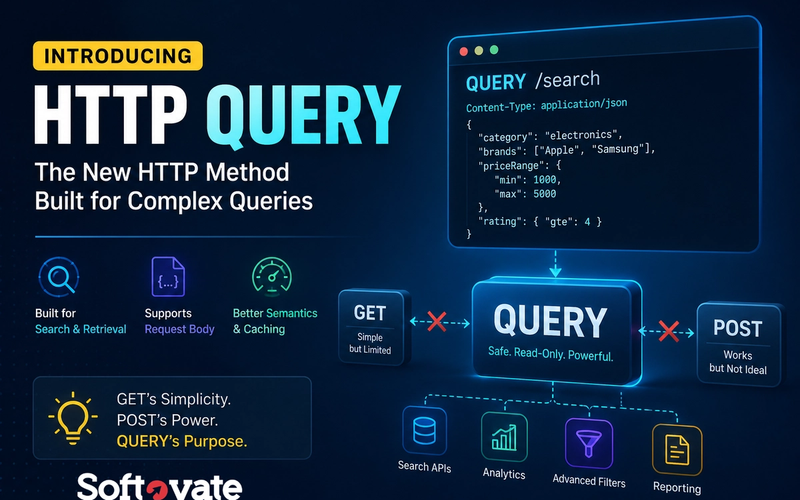
The Missing HTTP Method Is Finally Here: HTTP QUERY Explained
HTTP QUERY is a new HTTP method designed specifically for read-only data retrieval that requires a request body. Learn why GET requests struggle with complex searches, why POST became an imperfect workaround, and how HTTP QUERY provides a cleaner, standards-based solution for modern APIs.
- Web Development
- API Development
- Backend Development
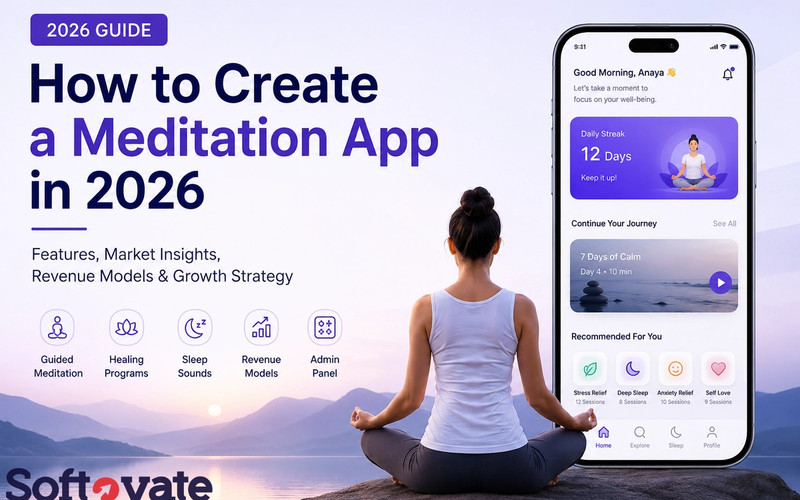
How to Create a Meditation App in 2026: Features, Costs, Revenue Models & Growth Strategy
Planning to build a meditation app in 2026? Learn about essential features, guided meditation, healing programs, admin panel requirements, revenue models, user acquisition strategies, development costs, and monetization opportunities.
- Mobile App Development
- Meditation App
- Wellness App
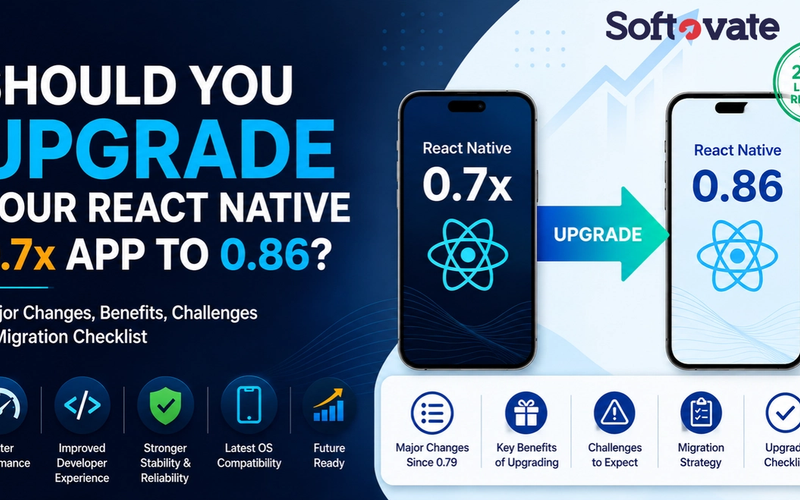
Should You Upgrade to React Native 0.86? Complete Guide for React Native 0.7x Apps
Still running React Native 0.7x? Learn what's changed from React Native 0.80 to 0.86, the benefits of upgrading, potential challenges, migration strategy, upgrade checklist, and the impact on your existing mobile application.
- React Native
- Mobile App Development
- Hire React Native Developer