

One of the first decisions every startup, founder, or business faces before building a mobile app is: native or cross-platform? Ten years ago, the answer was often straightforward—native for performance, cross-platform for budget. In 2026, modern frameworks like React Native and Flutter have matured so much that many users cannot tell the difference. The decision is no longer about performance alone. It is about choosing the right technology for your business goals, product requirements, timeline, and budget.
Planning your mobile build? Explore mobile app development, React Native development, and Flutter development with Softovate.
What Is Native App Development?
Native app development means building separate applications for Android and iOS using platform-specific technologies.
Android
Technologies: Kotlin, Java
Direct access to Android APIs and OS capabilities.
iOS
Technologies: Swift, Objective-C
Maximum control over device functionality and platform UX.
Native apps directly use platform APIs and operating system capabilities—providing maximum control over device functionality and user experience.
What Is Cross-Platform App Development?
Cross-platform development allows developers to build Android and iOS applications using a shared codebase. Instead of maintaining two separate apps, developers write code once and deploy it across multiple platforms.
This significantly reduces development time, maintenance effort, and development costs. Cross-platform adoption has grown dramatically because businesses want faster launches and lower maintenance overhead.
Want to ship Android and iOS from one codebase? Explore cross-platform app development with Softovate.
Popular Cross-Platform Technologies in 2026
Several frameworks exist today. Here are the most relevant options for startups and businesses evaluating their stack.
React Native
Maintained by Meta. Uses JavaScript, TypeScript, and the React ecosystem.
Best for: Startups, SaaS products, marketplaces, social platforms, enterprise apps.
Flutter
Maintained by Google. Uses Dart and a widget-based architecture.
Best for: Custom UI, design-focused apps, multi-platform products, interactive experiences.
Xamarin
Microsoft's .NET-based framework for building native Android and iOS apps with shared C# logic.
Best for: Enterprise teams invested in the Microsoft ecosystem and existing .NET codebases.
Ionic
Web technology-based framework using HTML, CSS, and JavaScript—often paired with Capacitor for native device access.
Best for: Rapid prototyping, internal business tools, and simpler cross-platform applications.
Why React Native and Flutter Dominate the Market
Although many frameworks exist, the market is largely dominated by React Native and Flutter. Most startups evaluating cross-platform development in 2026 are choosing between these two technologies.
The reason is simple: both offer excellent performance, strong community support, large ecosystems, enterprise adoption, and long-term stability.
Comparing the two leaders? See our guide on React Native vs Flutter in 2026, or work with our React Native and Flutter teams directly.
The Biggest Myth: Cross-Platform Apps Are Slow
Many people still believe cross-platform apps have performance issues. That perception comes from older technologies that struggled to deliver native-like experiences.
In 2026, that is no longer true for most business applications.
React Native today
Fabric Architecture, TurboModules, JSI, and the Hermes engine have dramatically improved rendering and startup performance.
Flutter today
The Impeller rendering engine delivers optimized graphics and high-performance animations across devices.
For food delivery, e-commerce, healthcare, booking platforms, social networks, business applications, and AI platforms, users typically cannot identify whether the app was built natively or with modern cross-platform frameworks. The difference is often negligible when implemented correctly.
Native vs Cross-Platform: At a Glance
| Factor | Native | Cross-Platform |
|---|---|---|
| Development speed | Separate Android and iOS teams; features often built twice | Single team, shared codebase; faster testing and releases |
| Cost | Higher—separate developers and duplicate maintenance | Lower team size and maintenance; faster launch |
| User experience | Perfect platform-specific behavior; full access to latest OS features | Consistent UX across platforms; faster feature delivery |
| Maintenance | Two codebases, two test cycles, two release processes | One codebase; significantly less duplication as the product grows |
Native vs Cross-Platform: Development Speed
Native development requires an Android team, an iOS team, and separate codebases. Every feature must often be developed twice.
Cross-platform development requires a single development team and a shared codebase. Most features are developed once and deployed to both platforms.
Result: faster development, testing, releases, and iterations. For startups, this can significantly reduce time-to-market.
Native vs Cross-Platform: Development Cost
Cost is often one of the biggest considerations. Native development usually requires separate Android and iOS developers. Cross-platform development often allows businesses to reduce team size, reduce maintenance effort, and launch faster.
This is one of the primary reasons startups choose React Native or Flutter over fully native builds.
Native vs Cross-Platform: User Experience
Native advantages
Perfect platform-specific behavior, full access to the latest platform features, maximum customization for specialized use cases.
Cross-platform advantages
Consistent user experience, faster feature delivery, easier maintenance across Android and iOS.
For most commercial applications, modern cross-platform solutions provide an excellent user experience.
Native vs Cross-Platform: Maintenance
Maintaining separate Android and iOS projects means every update may require two code changes, two testing cycles, and two release processes. Cross-platform development reduces that duplication significantly—and the value grows as your product scales.
When Native Development Makes Sense
Native development is often the better choice when:
1. Performance is mission critical
- High-end gaming
- AR/VR applications
- Advanced video processing
- Graphics-intensive applications
2. Deep platform integration is required
- Specialized hardware integrations
- Custom Bluetooth devices
- Advanced background services
3. Platform-specific experiences are critical
Some applications require a highly customized experience for each platform that goes beyond what cross-platform frameworks can efficiently deliver.
When Cross-Platform Is the Better Choice
For most startups and businesses, cross-platform development is often the smartest option. Choose cross-platform when:
1. You need Android and iOS together
One codebase. Faster launch. Lower maintenance.
2. Budget matters
Most startups need to validate ideas before making large investments. Cross-platform development helps achieve that without sacrificing quality.
3. Faster time-to-market is important
Launching sooner often matters more than technical perfection—especially in competitive markets.
4. You need an MVP
React Native and Flutter are excellent choices for startup MVPs, product validation, and investor demonstrations. See our MVP development approach for lean, launch-ready builds.
5. Your app is business-focused
- E-commerce and marketplaces
- Food delivery and booking platforms
- Healthcare and education
- CRM and business applications
- Social apps and AI products
Cross-platform technologies are more than capable of supporting these products at scale.
Building an MVP or scaling a product? Combine MVP development with expert mobile app development to launch faster without cutting corners.
React Native vs Flutter: Which Is Better?
The answer depends on your product—not a generic ranking. Read our full comparison: React Native vs Flutter: Which Should You Choose in 2026?
Choose React Native when
You already use React for web. Hiring flexibility matters. You want a massive ecosystem and strong third-party integration support.
Choose Flutter when
UI consistency is critical. Custom design is a priority. Heavy animations are required. Multi-platform expansion is part of your roadmap.
What We Recommend to Most Startups in 2026
For many startups, React Native and Flutter provide the best balance of performance, development speed, cost efficiency, scalability, and user experience. Many successful products today are built entirely on modern cross-platform frameworks and serve millions of users worldwide.
The technology has matured significantly. The question is no longer "Can cross-platform handle it?" The question is: "Does native development provide enough additional value to justify the extra investment?"
For most startup products, the answer is often no.
Final Thoughts
Native development remains the gold standard for highly specialized applications where performance and platform integration are critical.
However, modern cross-platform frameworks such as React Native and Flutter have evolved dramatically and now power many successful consumer and enterprise applications. For most startups, SaaS products, marketplaces, AI platforms, and business applications, cross-platform development offers the best combination of speed, quality, scalability, and cost efficiency.
The right choice is not about following trends. It is about choosing the technology that helps your product succeed.
Ready to build? Work with our React Native developers, Flutter developers, or full mobile app development team.
Latest Blogs
View All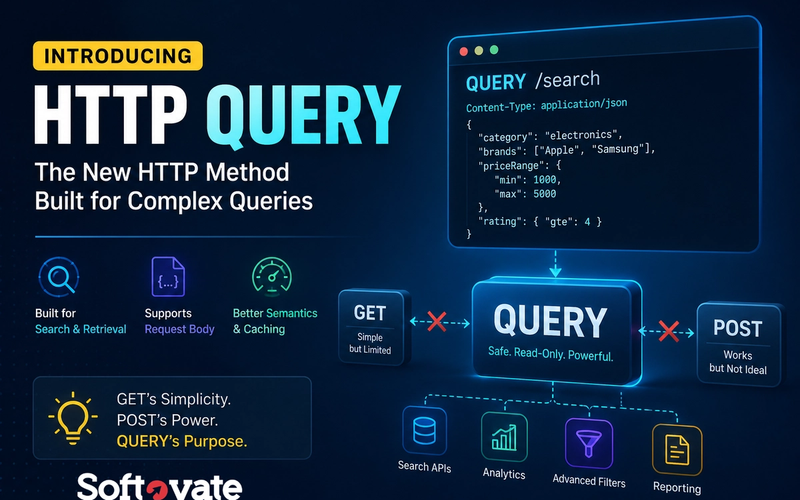
The Missing HTTP Method Is Finally Here: HTTP QUERY Explained
HTTP QUERY is a new HTTP method designed specifically for read-only data retrieval that requires a request body. Learn why GET requests struggle with complex searches, why POST became an imperfect workaround, and how HTTP QUERY provides a cleaner, standards-based solution for modern APIs.
- Web Development
- API Development
- Backend Development

How to Create a Meditation App in 2026: Features, Costs, Revenue Models & Growth Strategy
Planning to build a meditation app in 2026? Learn about essential features, guided meditation, healing programs, admin panel requirements, revenue models, user acquisition strategies, development costs, and monetization opportunities.
- Mobile App Development
- Meditation App
- Wellness App
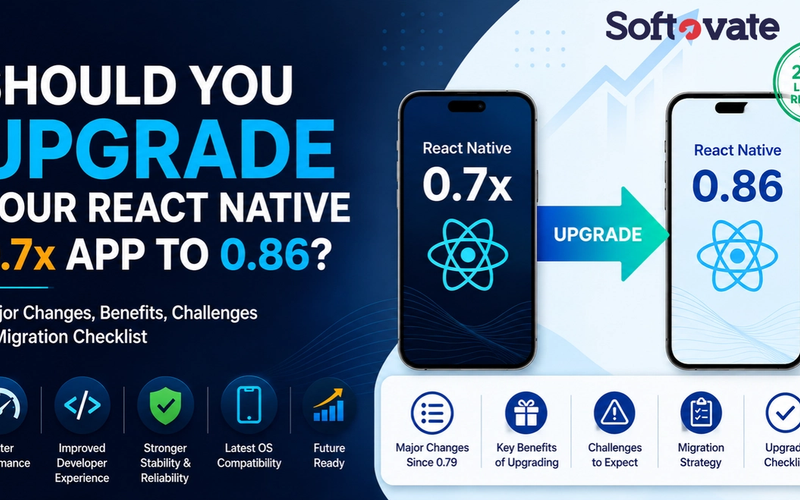
Should You Upgrade to React Native 0.86? Complete Guide for React Native 0.7x Apps
Still running React Native 0.7x? Learn what's changed from React Native 0.80 to 0.86, the benefits of upgrading, potential challenges, migration strategy, upgrade checklist, and the impact on your existing mobile application.
- React Native
- Mobile App Development
- Hire React Native Developer